Country’s largest coconut growing province manages to control imported pest

The Mekong Delta province of Ben Tre has basically controlled the spread of the coconut black – headed caterpillar after local authorities and farmers took intensive measures to destroy it.
Country’s largest coconut growing province manages to control imported pest ảnh 1Coconut trees infested by the coconut black–headed caterpillar in Ben Tre province. (Photo: VNA)
Ben Tre (VNS/VNA) – The Mekong Delta province of Ben Tre has basically controlled thespread of the coconut black – headed caterpillar after local authorities andfarmers took intensive measures to destroy it.

In July last year, the country’s largest coconut-growing province reported theappearance of the pest for the first time on a total area of 2.4ha of coconutin Binh Dai district’s Phu Long commune.

It eats leaves and the husk of immature coconuts, damaging the fruits andreducing yields.

It is endemic in countries like India, Sri Lanka and Thailand.

Some 393ha of coconut trees have been affected in the province so far,according to its Plant Protection and Cultivation Sub-department.

More than 100ha have been treated and many of the trees are recovering well.

The province has used pesticides including bio-pesticides to kill the pest,using drones to spray them on more than 30ha in Phu Long last August.

Huynh Quang Duc, deputy director of the province Department of Agriculture andRural Development, said the pest has been eradicated to a great extent inlocalities first affected by the pest such as Binh Dai and Chau Thanh districtsand Ben Tre city.

Others are continuing to taking preventive measures, he said.

Tran Van Can of Chau Thanh’s Huu Dinh commune has a 2,000sq.m coconut groveaffected by the pest and he has sprayed pesticides.

It has not been damaged too much and has started to have shoots again andfruits, he said.

Vo Van Nam, head of the sub-department, said the districts of Mo Cay Bac, MoCay Nam, Chau Thanh, and Binh Dai, and Ben Tre city have completed the firstround of pesticide spraying.

The province has also cut down 4,659 severely damaged trees.

The Ho Chi Minh City University of Agriculture and Forestry and the Departmentof Agriculture and Rural Development have released 150 pairs of ong ki sinh duito (Brachymeria sp), a parasitic wasp, on a 2ha grove in Mo Cay Bac wherepesticides have not been sprayed as a biological agent to control the pest.

The sub-department has trained local agriculture officials in breeding earwigs,another creature that preys on the caterpillar.

The province plans to increase the breeding of earwigs and release a total of28,000 of them in affected groves this year.

The department will step up advocacy activities to encourage farmers to takeproper measures to fight the pest.

For instance, in groves in which ong ki sinh dui to and earwigs have beenreleased, farmers should not spray pesticides.

Ben Tre has more than 72,000ha under coconut, or more than 42 percent of thecountry’s total./.
VNA

See more

Construction activity is one of the causes of air pollution in Hanoi. (Photo: VNA)

Hanoi takes urgent measures to curb air pollution

The city requires the enhanced application of advanced technologies and remote monitoring systems, including satellite remote sensing, drones, and AI-integrated traffic cameras, to monitor, detect, and strictly address the illegal burning of garbage, straw, and agricultural by-products.

The World Bank delegation holds working session with Can Tho city People's Committee and relevant units (Photo: VNA)

World Bank delegation surveys Can Tho urban resilience project

The project is jointly financed by the WB with up to 250 million USD and a 10-million-USD non-refundable grant from the Swiss State Secretariat for Economic Affairs (SECO), along with counterpart funding from the Vietnamese Government. Its goal is to build a climate-resilient and sustainable city that can drive socio-economic growth across the Mekong Delta, mitigate flood vulnerability in central Can Tho, and improve inter- and intra-regional transport connectivity.

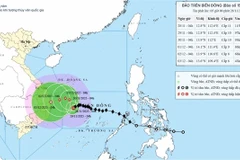
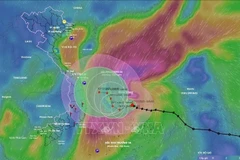
The direction of Storm Koto as of 04:00 on November 27. (Photo: VNA)

Lam Dong province’s coastal localities brace for Storm Koto

Local authorities have activated round-the-clock duty operations, continuously updated storm warnings and flood information and intensified inspections of riverside and seaside areas, low-lying zones, and locations at high risk of landslides and deep flooding.

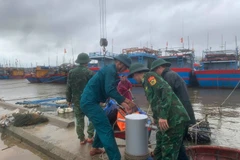
Border guard officers at Ky Ha Port Border Gate are assisting residents in securing their boats. (Photo: VNA)

VPA General Staff directs urgent response to Storm Koto

Military Regions 4, 5 and 7 were tasked with directing provincial military commands to advise local authorities, review response plans, and coordinate with relevant departments and sectors to identify disaster-prone areas, including locations at risk of flash floods, landslides, major dykes, embankments and reservoirs, and flood-prone zones, particularly those heavily affected by recent rains.

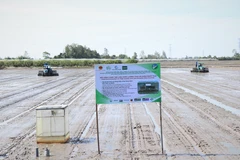
In 2024–2025, the project has implement seven pilot models in Can Tho city and the provinces of Vinh Long, Dong Thap, and An Giang. (Photo: VNA)

One-million-hectare high-quality, low-emission rice project changes mindset of producers

A project on sustainable development of one million hectares of high-quality, low-emission rice cultivation associated with green growth in the Mekong Delta by 2030 has so far helped shift the awareness and mindset of rice producers toward greater responsibility and toward adopting production trends aligned with global orientations for “green development.”

Two rangers check a camera trap in jungle of the Saola Nature Reserve in Hue city. (Photo: VNA)

Vietnam’s forests show signs of wildlife recovery

Vietnam’s forests are among the world’s most biodiverse, yet wildlife remains threatened by habitat loss and snaring. A new WWF-Vietnam survey, using 350,000 camera-trap days across 21 forests, reveals urgent conservation needs and signs of recovery.

A thin layer of frost covered the wooden deck atop Fansipan, where tourists often gather to admire the clouds. (Photo published by VNA)

Fansipan sees first frost of winter season

Visitors and local residents reported that the frost formed shortly before dawn, leaving a light white coating on pathways, stone steps and wooden platforms used for cloud viewing. The cold spell influencing Lao Cai has continued to strengthen and then stabilise, and forecasts suggest temperatures on Fansipan will remain low from late night to early morning on November 22, meaning frost may reoccur.